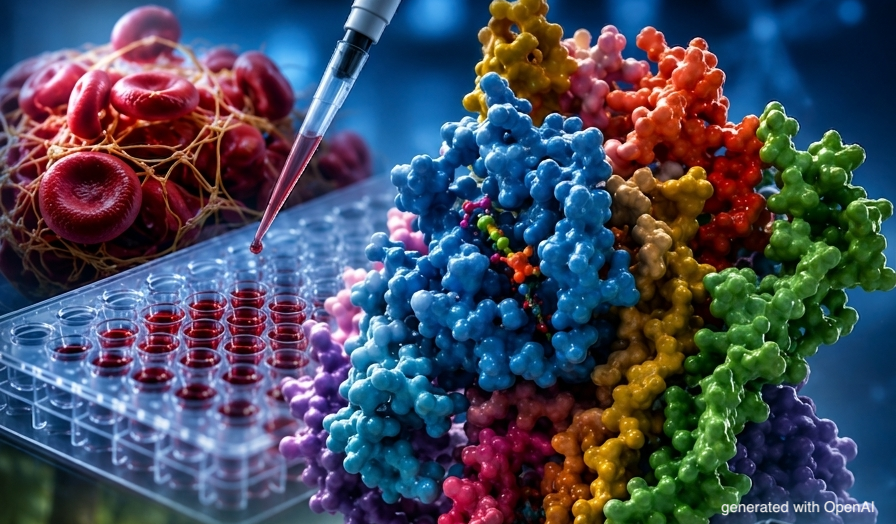
Explore biological processes at the molecular and cellular level. Topics include the structure and function of biomolecules, protein-protein interactions, cellular signalling, natural product chemistry, clinical chemistry, and biotechnology. Students gain hands-on experience and insights into modern molecular biology, biochemistry, and biomedical research.

Life Science
Master of ScienceBiomedical research, biotechnological innovation, and global environmental change – the challenges in the field of life sciences are diverse. The research-oriented Master’s programme in Life Science is aimed at students interested in molecular, biomedical and environmental processes as well as their analysis using modern experimental methods. The programme combines Molecular and Biomedical Life Science with Environmental Life Science and places a strong emphasis on bioanalytical methods and interdisciplinary laboratory training. The programme prepares graduates for challenging careers in life science, biotechnology, environmental science, and related fields, and provides an excellent foundation for pursuing a doctoral degree.
Overview
The Master’s programme "Life Science (M.Sc.)" provides advanced knowledge on the organization and pathways of life at the molecular and cellular level in both molecular-biomedical ("Molecular and Biomedical Life Science") and environmentally relevant ("Environmental Life Science") contexts. The curriculum places a particular emphasis on (bio)analytical methods and experimental training, enabling students to investigate complex biological processes and systems using modern analytical and quantitative approaches. The programme is designed for graduates of Bachelor’s programmes with a strong interest in research-oriented topics at the interface of chemistry and biology.
| Degree | Master of Science | ||||
| Standard period of study | 4 | ||||
| Start of programme | Summer semester Winter semester | ||||
| Application deadline for summer semester | |||||
| Application deadline for summer semester for internationals |
| ||||
| Application deadline for winter semester | |||||
| Application deadline for winter semester for internationals |
| ||||
| Teaching language | English German and English | ||||
| Admission restriction | no | ||||
| Admission requirements | To be enrolled in the master program „Life Science“ students have to be graduated either from the Bachelor’s programme “Angewandte Naturwissenschaften (B.Sc.)” with specialisation in chemistry/biology at the University of Koblenz or any other study program on the subjects chemistry, biology, biochemistry, or biotechnology in which the following contents were part of: a. Basics and applications of general and inorganic chemistry b. Substance classes and reaction mechanisms of organic chemistry c. Basics of biodiversity, taxonomy and phylogeny, microbiology and ecotoxicology The graduation grade of the respective bachelor program must be 2.5 or better. In addition, there should be basic experience concerning practical work in the organic or biochemistry lab of 10 ECTS. Exceptions from the above prerequisites are to be decided by the board of examinations upon an application of the student. Exceptions might be a grade for the bachelor thesis of 1.5 or better or at least one year of professional working experience in chemistry, biochemistry or biotechnology. |
Contents and structure
The Master‘s program Life Science (M.Sc.) comprises four semesters of fulltime study during which participants are required to obtain a total of 120 ECTS. Ultimately, a total of 300 ECTS are required for the award of the M.Sc. degree. Compulsory courses are organized in the two main categories "Molecular and Biomedical Life Science" and "Environmental Life Science" (60 ECTS). Elective modules (15 ECTS) offer students the opportunity to deepen their knowledge according to their individual interests. The practical phase emphasizes research-oriented learning and consists of a research project (15 ECTS) as well as the Master‘s thesis including a final oral exam (30 ECTS). During these phases, students conduct an independent research project and gain practical experience in scientific investigation and data analysis. All core modules are taught in English. In the elective area, students may also choose modules taught in German.
Modules
Molecular and Biomedical Life Science
Environmental Life Science
Examine biological systems in their environmental context. Focus areas include organism-environment interactions, ecological processes, and environmental influences on biological systems. Students learn to analyse environmental and ecological challenges using modern methods.
Bioanalytical Methods and Experimental Training
A central component of the programme is the application of modern bioanalytical and other experimental methods within an interdisciplinary biology-chemistry framework. Students learn to analyse biological and environmental samples, apply advanced bioanalytical techniques, and interpret complex scientific data in laboratory and research settings.
Prospects
As a graduate, you will have in-depth scientific knowledge in topics of high scientific and social significance that will qualify you for demanding jobs in sectors related to biology, chemistry, biotechnology and life sciences in general. In particular, you will be qualified for a career in research and development departments of industrial companies, but also for challenging administrative careers as e.g. in environmental authorities. Due to the strong research orientation of the programme, the Master’s degree also provides excellent preparation for pursuing a doctoral degree (PhD) in the life sciences.
Personal interests and expectations
The Master’s programme "Life Science" is particularly designed for students who have a strong interest in the molecular basis of life and its (bio)medical and environmental implications. As a natural scientist you should enjoy practical laboratory work as well as engaging with the theoretical concepts underlying the topics addressed in the programme.
Semester abroad
You have the option of spending a semester abroad, and we encourage you to take advantage of this opportunity. However, we strongly recommend that you contact subject-related counselling to discuss your plans. The Office of International Relations at the University of Koblenz will be happy to assist you with any organisational queries regarding your semester abroad.
Why study 'Life Science' in Koblenz?
A particular strength of the programme is not only the two focus areas but also its strong emphasis on modern bioanalytical and experimental methods, which are applied across both focus areas within an interdisciplinary biology-chemistry framework. In addition, the programme is embedded in the growing Life Science and biotechnology landscape of Rhineland-Palatinate, which promotes close cooperation between universities, research institutions, start-ups, and industry. State initiatives such as BioVation RLP and the [LiSci]RLP incubator support innovation, research collaboration, and the transfer of scientific ideas into practical applications.
This environment offers you valuable opportunities to engage with current research topics and emerging developments in the life sciences.
Applicants with foreign university entrance qualifications
Please find out more about the separate application process under International and Apply Now!
Due to the long visa application process, we strongly advise non-EU students to apply for the summer semester by 15 November and for the winter semester by 15 May.
A personal laptop with a current version of Windows, macOS, or Linux is required for successful participation in the programme, as coursework regularly involves the use of digital tools, software applications, and online learning resources.
Further links
Contact
Subject-specific Study Advisory Service
UNIVERSITY OF KOBLENZ
Universitätsstraße 1
56070 Koblenz
© Universität Koblenz