
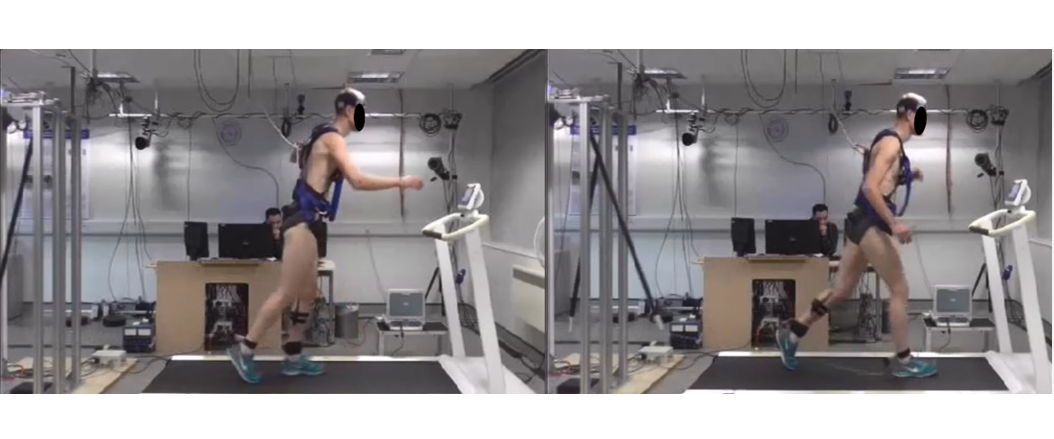
Teaching
At our department, we are passionate about integrating cutting-edge research into the teaching environment. By merging scientific findings with academic learning, we aim to provide students with a dynamic, hands-on educational experience. Our goal is to bridge the gap between theory and practice, ensuring that students not only understand fundamental concepts but also gain exposure to the latest advancements in the field. Through interactive learning, case studies, and research opportunities, we prepare future professionals to innovate and excel in the continuously evolving world of exercise and movement science.
Bachelor and Master Thesis
Contact Dr. Anika Weber (weber1@uni-koblenz.de) no later than 01.09. (for starting the thesis in the winter semester) or 01.02 (for the summer semester) if you are interested in writing a thesis in the field of training science or movement science. Please note that supervision capacities for theses may already be exhausted before the above-mentioned deadlines. Review the following information before contacting us by email:
Possible topics for BA and MA thesis:
1. An Artificial Intelligence Framework for the Automated Detection of Muscle-Tendon Junctions and Fascicles in Ultrasound Imaging
Leitner C et al., 2022. A Human-Centered Machine-Learning Approach for Muscle-Tendon Junction Tracking in Ultrasound Images. IEEE Trans Biomed Eng. 2022 Jun;69(6):1920-1930. doi: 10.1109/TBME.2021.3130548.
Ritsche P et al., 2023. Ultrasound Med Biol. 2024 Feb;50(2):258-267. doi: 10.1016/j.ultrasmedbio.2023.10.011.
2. AI-Driven Real-Time Processing of Ultrasound Radio Frequency Signals
z.B. Ben Luijten et al., 2022 Ultrasound signal processing: from models to deep learning
3. Quantifying the Test-Retest Reliability and Target Registration Error (TRE) of Ultrasound-to-Motion Capture Spatial Calibration
z.B. Freehand 3D Ultrasound Calibration: A Review, P-W. Hsu, R. W. Pragerm, December 2007
4. Monoarticular vs. biarticular muscle functions
z.B. Jacobs, R.; Bobbert, M. F.; van Ingen Schenau, G. J. (1993). Function of mono- and biarticular muscles in running. Medicine & Science in Sports & Exercise, 25(10), 1163-1173
5. Application of electronic muscle stimulation
z.B. Dong, S.; Liu, Y.; Liu, Z.; Shen, P.; Sun, H.; Zhang, P.; Fong, D. T. P.; Song, Q. (2024). Can Arthrogenic Muscle Inhibition Exist in Peroneal Muscles Among People with Chronic Ankle Instability? A Crosssectional Study. Sports Medicine - Open, 10 (35)
6. Influence of orthoses on movement biomechanics
z.B. Stacoff, A.; Kramers-de Quervain, I.; Dettwyler, M.; Wolf, P.; List, R.; Ukelo, T.; Stüssi, E. (2007). Biomechanical effects of foot orthoses during walking. The Foot, 17(3), 143-153
7. Effects of Aging on Muscle Architecture
z.B. Narici, M. V., Maganaris, C. N., Reeves, N. D., & Capodaglio, P. (2003). Effect of aging on human muscle architecture. Journal of Applied Physiology, 95(6), 2229–2234. https://doi.org/10.1152/japplphysiol.00433.2003
8. Effects of High-Load Resistance Training on Muscle Architecture
z.B. Seynnes, O. R., de Boer, M., & Narici, M. V. (2007). Early skeletal muscle hypertrophy and architectural changes in response to high-intensity resistance training. Journal of Applied Physiology, 102(1), 368–373. https://doi.org/10.1152/japplphysiol.00789.2006
9. Effects of Eccentric Exercise on Muscle Adaptation
z.B. Baroni, B. M., Geremia, J. M., Rodrigues, R., De Azevedo Franke, R., Karamanidis, K., & Vaz, M. A. (2013). Muscle architecture adaptations to knee extensor eccentric training: Rectus femoris vs. vastus lateralis. Muscle & Nerve, 48(4), 498–506. https://doi.org/10.1002/mus.23785
10. Barefoot vs. Shod Running Neuromechanics
z.B. Ferri-Caruana, A., Cardera-Porta, E., et al. (2024). Barefoot vs. shod running: Electromyographic activity and neuromechanical comparisons of the medial and lateral gastrocnemius during running. Journal of Biomechanics, 176, 112371
11. Carbon-Fibre Plates in Shoes and Running Biomechanics
z.B. Cigoja, S., Fletcher, J. R., Esposito, M., Stefanyshyn, D. J., & Nigg, B. M. (2021). Increasing the midsole bending stiffness of shoes alters gastrocnemius medialis muscle function during running. Scientific Reports, 11, 749. https://doi.org/10.1038/s41598-020-80791-3
12. Physiological and Performance Determinants of Competition Performance in HYROX Athletes
z.B. Brandt, T., Ebel, C., Lebahn, C., & Schmidt, A. (2025). Acute physiological responses and performance determinants in Hyrox© - a new running-focused high intensity functional fitness trend. Frontiers in physiology, 16, 1519240. https://doi.org/10.3389/fphys.2025.1519240
13. Muscle-Tendon Mechanics and (Marathon) Running Performance
z.B. Kubo, K., Tabata, T., Ikebukuro, T., Igarashi, K., Yata, H., & Tsunoda, N. (2010). Effects of mechanical properties of muscle and tendon on performance in long distance runners. European journal of applied physiology, 110(3), 507–514. https://doi.org/10.1007/s00421-010-1528-1
14. Physiological and Neuromuscular Differences Between Endurance- and Strength-Trained Athletes
z.B. Jurasz, M., Boraczyński, M., Wójcik, Z., & Gronek, P. (2022). Neuromuscular Fatigue Responses of Endurance- and Strength-Trained Athletes during Incremental Cycling Exercise. International journal of environmental research and public health, 19(14), 8839. https://doi.org/10.3390/ijerph19148839