Visit profile
Inclusive digital twin for small municipalities - participatory future planning with AI

DiTKo
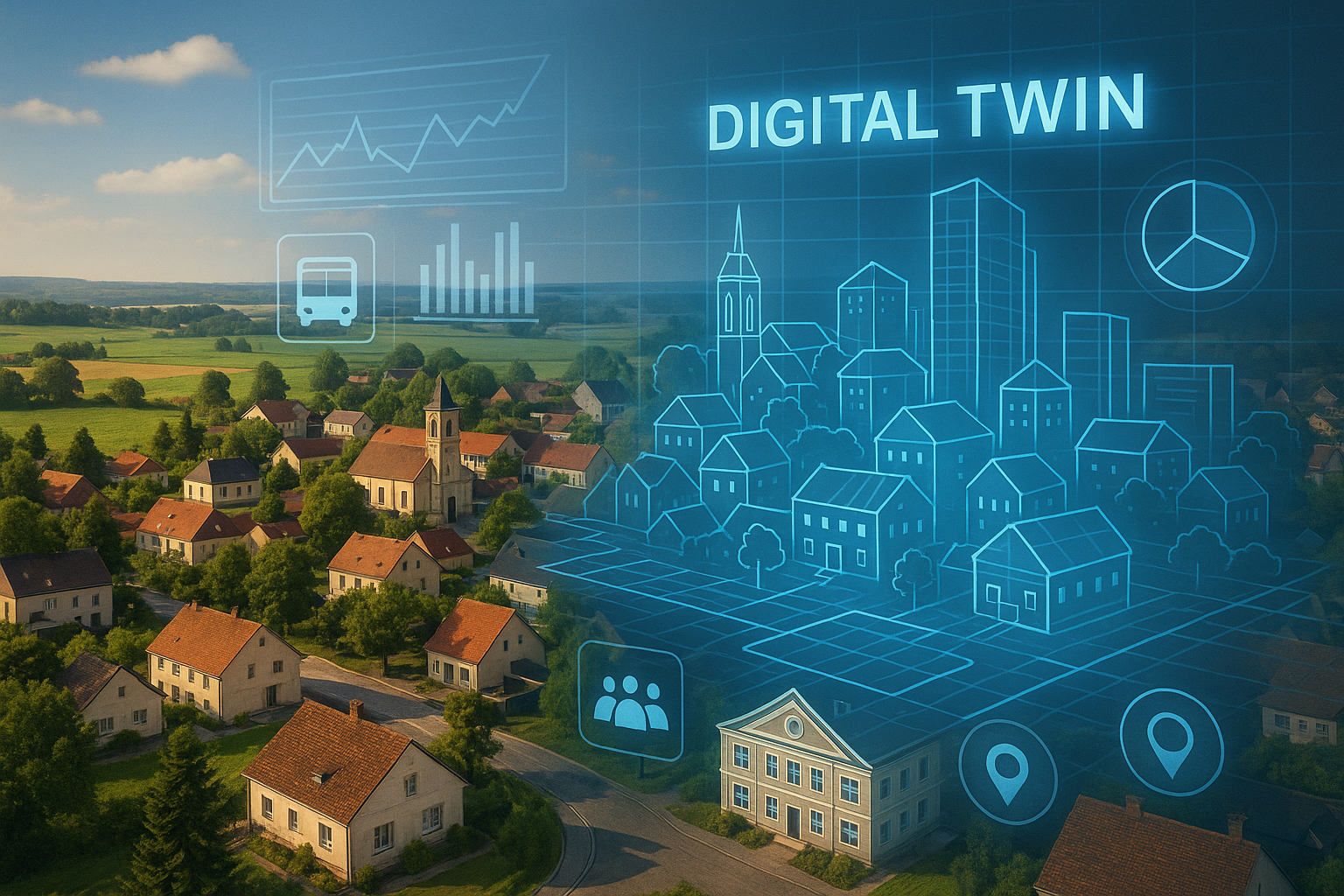
DiTKo is specifically aimed at small municipalities in Rhineland-Palatinate with fewer than 5,000 inhabitants. These communities face major challenges - demographic change, limited financial and human resources, and increasing demands on infrastructure and public services - yet they often lack suitable data-driven planning tools. The project develops a lean and practice-oriented Digital Twin tailored to the specific conditions of small municipalities. It integrates existing municipal data, visualizes planning options, and enables simple AI-supported scenario analyses, for example for childcare facilities, town center development, mobility, or small-scale energy projects. The goal is to make decision-making processes more transparent, comprehensible, and inclusive. The prototype will be co-developed, tested, and scientifically evaluated together with pilot municipalities. Finally, a transferable toolkit and handbook will be created so that additional small municipalities in Rhineland-Palatinate can also adopt and use the solution.
Current situation
Small municipalities in Rhineland-Palatinate — particularly communities with fewer than 5,000 inhabitants — face significant challenges: demographic change, limited mobility, maintaining public services, financial constraints, and limited administrative and personnel resources within local councils. At the same time, they benefit from strong community structures, civic engagement, and short decision-making processes. While large cities are increasingly using data-driven governance tools, transferable and low-threshold Digital Twin solutions for small municipalities are still lacking.
Project objective
DiTKo develops a practical, lightweight, and transferable Digital Twin specifically designed for small municipalities.
The aim is to support municipal planning processes through data-driven approaches while at the same time strengthening citizen participation.
The Digital Twin is intended to:
consolidate existing municipal data
visualise planning options
enable simple AI-supported scenarios
present the consequences of decisions in a transparent and understandable way
Key objectives
- Adapting the digital twin approach to the needs of small municipalities
Developing a cost-effective, modular and transferable solution - Integration of AI-supported scenario analyses
Simulating typical municipal projects, such as: Construction of a childcare center
Creation of an intergenerational community space
Barrier-free redesign of town centers, and
Small-sclae energy projects
Ensuring inclusive participation through
Easy-to-understand visualizations
Multilingual Support
Accessible and user-friendly operation, and
Involvement of children, young people, elderlies and people with disabilities
Fundings & Partners
Funded by

Contact
UNIVERSITY OF KOBLENZ
Universitätsstraße 1
56070 Koblenz
© Universität Koblenz