UNIVERSITY OF KOBLENZ
Universitätsstraße 1
56070 Koblenz

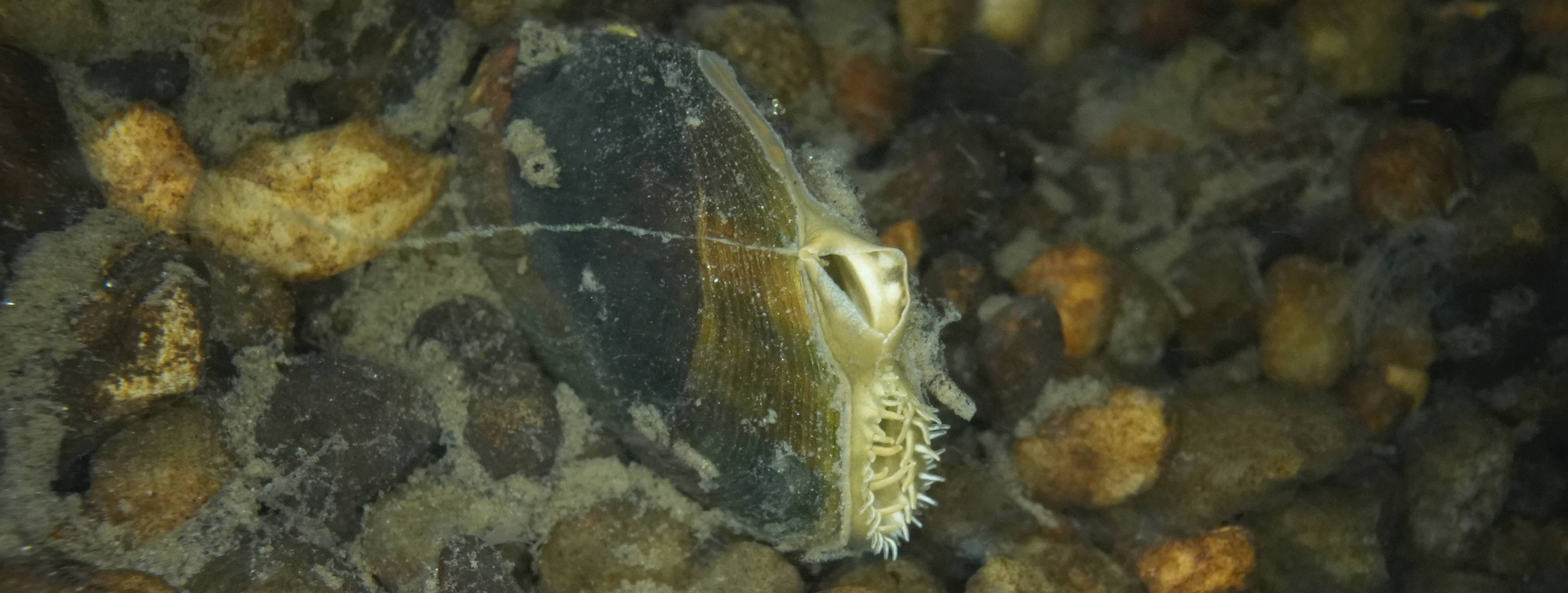
The long-term aim is to re-establish self-sustaining populations of thick-shelled river mussels in suitable water bodies in Rhineland-Palatinate. This research project contributes to achieving this ambitious goal, in particular through studies on the habitat requirements of thick-shelled river mussels, the establishment of a scientifically based conservation breeding programme, and investigations into the requirements of juvenile thick-shelled river mussels regarding sediment quality and food.
Freshwater mussels are among the most critically endangered species worldwide. However, healthy mussel populations in rivers provide important ecosystem services, for example by filtering large quantities of particulate matter from the water and loosening the sediments, and are therefore of paramount importance for the protection of aquatic biodiversity. The thick-shelled river mussel (Unio crassus) is therefore, like some other freshwater mussels of the genus Unio, strictly protected (Federal Nature Conservation Act, Habitats Directive, Red List).
In Rhineland-Palatinate, the thick-shelled river mussel is classified as critically endangered. For the sustainable protection of the thick-shelled river mussels in Rhineland-Palatinate, knowledge of the species’ habitat requirements is essential, in addition to targeted monitoring of mussel populations. Until now, the habitat requirements of thick-shelled river mussels have mostly been derived from those of the closely related freshwater pearl mussel (Margaritifera margaritifera); however, initial studies on the requirements of thick-shelled river mussels suggest that this approach is not effective, as the requirements of the two species do not appear to be identical. This research project therefore aims to investigate which factors have a decisive influence on the population densities and structure of thick-shelled river mussel populations.
As current knowledge suggests that long-term supplementary breeding of thick-shelled river mussels is necessary for the sustainable conservation of existing remnant populations, this project will also establish and further optimise a scientifically based conservation breeding programme, as well as investigate the potential of various river sections for the reintroduction of thick-shelled river mussels.


UNIVERSITY OF KOBLENZ
Universitätsstraße 1
56070 Koblenz
© Universität Koblenz