
The 4th Workshop on Eye Movements and the Assessment of Reading Comprehension
Quick Links: Questions for Panel Discussion | Registration | Call for Abstracts | Abstract Submission | Venue | Info for Presenters |Organizing Team | Accommodation
Dates: June 18-20, 2026
Venue: Hotel Diehls, Rheinsteigufer 1, 56077 (Find it on GoogleMaps)
Important Dates:
Abstract submission deadline: April 1, 2026Acceptance notifications: April 10, 2026Application deadline for travel stipends: April 23, 2026Registration period for presenters ends: May 15, 2026- Workshop dates: June 18-20, 2026
Keynote Speakers

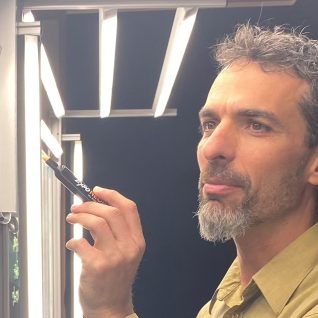
Ido Roll (Technion - Israel Institute of Technology)
Sascha Schröder (University of Göttingen)
Workshop Scope
Effective and widely available reading assessments are fundamental for educational and clinical settings, as they are instrumental for early diagnosis of reading difficulties, enabling timely and targeted intervention. In this workshop, we explore how eye-tracking combined with machine learning technologies can enhance reading assessments. Our goal is to bring together researchers from various relevant fields, including educational science, cognitive psychology, psycholinguistics, eye-tracking-based reading research, and machine learning. The workshop will provide a platform for exchanging ideas for the next generation of reading assessments aided by eye-tracking and machine learning technologies, as well as inspiring cross-disciplinary research collaborations.
Registration
Registration has closed.
Workshop Program
Day 1, June 18, 2026
Time | Type | Speaker(s) | Title |
|---|---|---|---|
8:30-09:00 | Registration | ||
09:00-09:30 | Welcome | Organizers; Claudia Quaiser-Pohl, Vice-President of Research at the University of Koblenz | |
09:30-10:30 | Keynote | Ido Roll | |
10:30–11:00 | Coffe Break | ||
11:00–11:30 | Talk 1 | Frances Cooley & David Quinto-Pozos | |
11:30–12:00 | Talk 2 | Renata Shamsutdinova & Julia Edeleva | Modelling Emergent Adult L2 Literacy as a Dynamic System for Adaptive Assessment |
12:00- | Lunch Break | ||
| Talk 3 | Michael Mooney, Edmond S.L. Ho, & Tanaya Guha | Conditioning on the Receivers State: Towards Reader-Specific Surprisal |
| Talk 4 | Akio Hayakawa & Horacio Saggion | Decoding Reading Effort: Probing Invisible Cognitive Load in L2 Reading via Layer-wise LLM Surprisal |
| Poster Session 1 with Coffee & Refreshments | ||
16:00-16:30 | Talk 5 | Marina Serrano-Carot, Bernhard Angele, Hemu Xu, & Martin R. Vasilev | Can Webcams Study Reading? Evidence from Co-Registration and Online Experiments |
16:30–17:00 | Talk 6 | Zrinka Fišer | Are Eye-Movement Markers of Dyslexia Universal? A Cross-Linguistic Diagnostic Challenge |
17:30-19:00 | Visit to Festung Ehrenbreitenstein and walk back to restaurant | ||
19:00 | Social dinner at Diehl's restaurant |
Poster Session 1:
1) The Effects of Word Length and Frequency on Eye Movements in a Bilingual Hindi-English Reading Corpus
Niket Agrawal, Anurati Tripathi, Anurag Khare, & Ark Verma
2) Getting the Most out of Noisy Paragraph Reading Data with GazeGenie
Bernhard Angele, Mario Romero Palau, Ladislao Salmerón, Marcin Budka, & Thomas Mercier
3) An Eye-Tracking Data-Cleaning Pipeline for Paragraph Reading by People with Aphasia
Kelly Knollman-Porter, Elise Bossenbroek, Candace van der Stelt, Karen Hux, & Sarah E. Wallace
4) Reading Skill, Not Language Background: An Eye-Tracking Study of Bilingual and Monolingual Undergraduates at a Hispanic-Serving Institution
Cristina Lozano-Argüelles
5) Age-Related Differences in Selective Attention during Sentence Processing
in Czech
Eva Pospíšilová & Jan Chromý
6) Relationship between Reading Strategies and Age - Results of an Eye-Tracking Study (cancelled)
Zsófia Gerák
7) Predictability in Reading and Writing: Evidence from Mandarin Classifiers
Jinyu Shi, Kate Nation, & Elizabeth Wonnacott
8) Cross-linguistic Correlates of Reading Difficulty: Investigating Bangla, Malayalam, Hindi and Urdu
Nayana Raj, Uzma Junaid, Bristi Saha, Karuna Kumari Sah, & Samar Husain
Day 2, June 19, 2026
Time | Type | Speaker(S) | Title |
|---|---|---|---|
09:00-10:00 | Keynote | Kate Nation | Becoming a Reader: The Nature and Consequences of Reading Experience |
10:00-10:30 | Talk 7 | Margarita Ryzhova, Oksana Ivchenko, Natalia Grabar, & Vera Demberg | |
10:30-11:00 | Coffee Break | ||
11:00-11:30 | Talk 8 | Laura Schwalm, Victor Kuperman, & Ralph Radach | |
11:30-12:00 | Talk 9 | Diana Morgan, Omer Shubi, & Yevgeni Berzak | Predicting Reading Comprehension from Eye Movements over Multiple-Choice Questions |
12:00-13:30 | Lunch Break | ||
13:30-14:30 | Keynote | Sascha Schröder |
The Relationship between Eye Movements and Reading Comprehension in Children |
14:30-15:00 | Talk 10 | Diane Mézière, Francesca Zermiani, Cristina Vargas, Sini Hyvönen, Leen Catrysse, Johanna Kaakinen, & Ladislao Salmerón | Eye-Movement Indicators of Reading Comprehension Outcomes: A Meta-analysis |
15:00-16:00 | Poster Session 2 | ||
16:00-16:30 | Talk 11 | Jan Brasser, Vera Demberg, Lena A. Jäger, & Maja Stegenwallner-Schütz | Predicting Reading Comprehension from Eye Movements on Critical Text Spans |
16:30-17:00 | Panel Discussion |
Poster Session 2:
1) Clause Boundary Effects Connected Text: Readers Slow Down at the Beginning and End of Syntactic Clauses Ondřej Drobil, & Titus von der Malsburg
2) Psycholinguistic Evidence on Semantic Processing of Discourse Relations in European Portuguese
Violeta Amélia Magalhães, Juliana Novo Gomes, & Purificação Silvano
3) Predicting Subjective Reading Experience from Eye Movements
Giulia Zantonello, & Sascha Schroeder
4) ValidEye: A Proposal for Incorporating Psychophysiological Data into Validation Studies
Elena Riol-Ramirez, Patricia E. Roman, & Isabel Benítez5) How Can Student Teachers’ Reading of Evidence Be Optimized? (cancelled)
Michael Rochnia6) From Instructions to Actions: Inferring Reading Behavior and Comprehension Using Webcam-Based Gaze (cancelled)
Goyal Shivalika, Thakur Piyush, & Laddi Amit
Questions
Use this link to submit your questions
Call for Abstracts
We invite submissions on any topic related to the workshop's theme, including:
- Methods and practices of reading assessment in education (including large scale assessments)
- Reading instruction and development
- Reading impairments and learning difficulties
- Machine reading comprehension
- AI, NLP and ML modeling of human reading
- Predictive modelling of language proficiency and reading interactions related to comprehension
- HCI, human factors, and interactive tutoring systems
- Eye tracking technologies
- Cognitive models of eye movements in reading
- Psycholinguistic analyses of reading
- Text readability and simplification
Since the workshop aims to bring together researchers from different communities and addresses a nascent research area, we also welcome contributions that involve eye movements in reading (or alternative methodologies such as self-paced reading and mouse tracking) without directly addressing the assessment of reading comprehension. Likewise, we invite contributions on reading assessments that do not involve eye-tracking.
Abstract Submission
- We invite submissions of short abstracts of up to 350 words.
- To submit your abstract, please fill in the abstract submission form
at https://forms.gle/Nh7bREP59eyeYQGEA - Submissions will be reviewed by the workshop organizers primarily with
an eye to relevance - We expect to accept 25–35 submissions.
Workshop Format
The first two days will feature a structured program, including talks, poster sessions, and group discussions. On the third day, the focus shifts to a more relaxed format, providing participants with the opportunity to network and plan joint activities in an informal setting while enjoying a hike or a boat tour on the rivers
Workshop Venue
The workshop will be held at the family owned Diehls Hotel which was established in 1919 and is beautifully located directly on the banks of the Rhine River. We booked two interconnected conference rooms Ehrenbreitenstein I and II which can accommodate up to 90 participants. Refreshments will be provided throughout the workshop.
A contingent of hotel rooms has been reserved for workshop participants. The hotel also features the restaurant, where we will enjoy our social dinner on Thursday evening.
The city of Koblenz is well connected to the city of Frankfurt via train. The venue is then accessible from Koblenz main station (Koblenz Hbf) by bus (16-25 Min depending on the bus route) or from the old city by taking a scenic ride across the Rhine river in the famous Koblenz Cable Car.
Contact information for booking and venue description with photos: https://diehls-hotel.de/en/rooms-suites/
Presentations
For those of you presenting a talk, please prepare your presentation for a duration of 20 min. It will be followed by 10 min of discussion. Please come prepared with your slides either on your own laptop or on a USB stick as a PDF as a backup. If you would like to use the presentation laptop we will provide at the venue, we kindly ask you to send us your slides as a PDF by Tuesday, June 18 (end of day) so we can have everything set up in advance.
For those of you presenting a poster, please prepare your poster in DIN A0 (841 × 1189 mm or approximately 33.1 × 46.8 inches) format in landscape orientation.
Accommodation
The following is a list of suggested hotels in Koblenz. We therefore booking as early as possible.
Organizing Team
Name | Institution | Role | |
|---|---|---|---|
Maja Stegenwallner-Schütz | University of Koblenz | Local organizer, Program Chair | |
Lena Jäger | University of Zurich | Co-Organizer, Program Chair | |
Yevgeni Berzak | Technion - The Israel Institute of Technology | Co-Organizer, Program Chair | |
Titus von der Malsburg | University of Stuttgart | Co-Organizer, Program Chair | |
Anna Bondar | University of Zurich | Co-Organizer | |
Natascha Reißel | University of Koblenz | Local co-organizer |

© Universität Koblenz