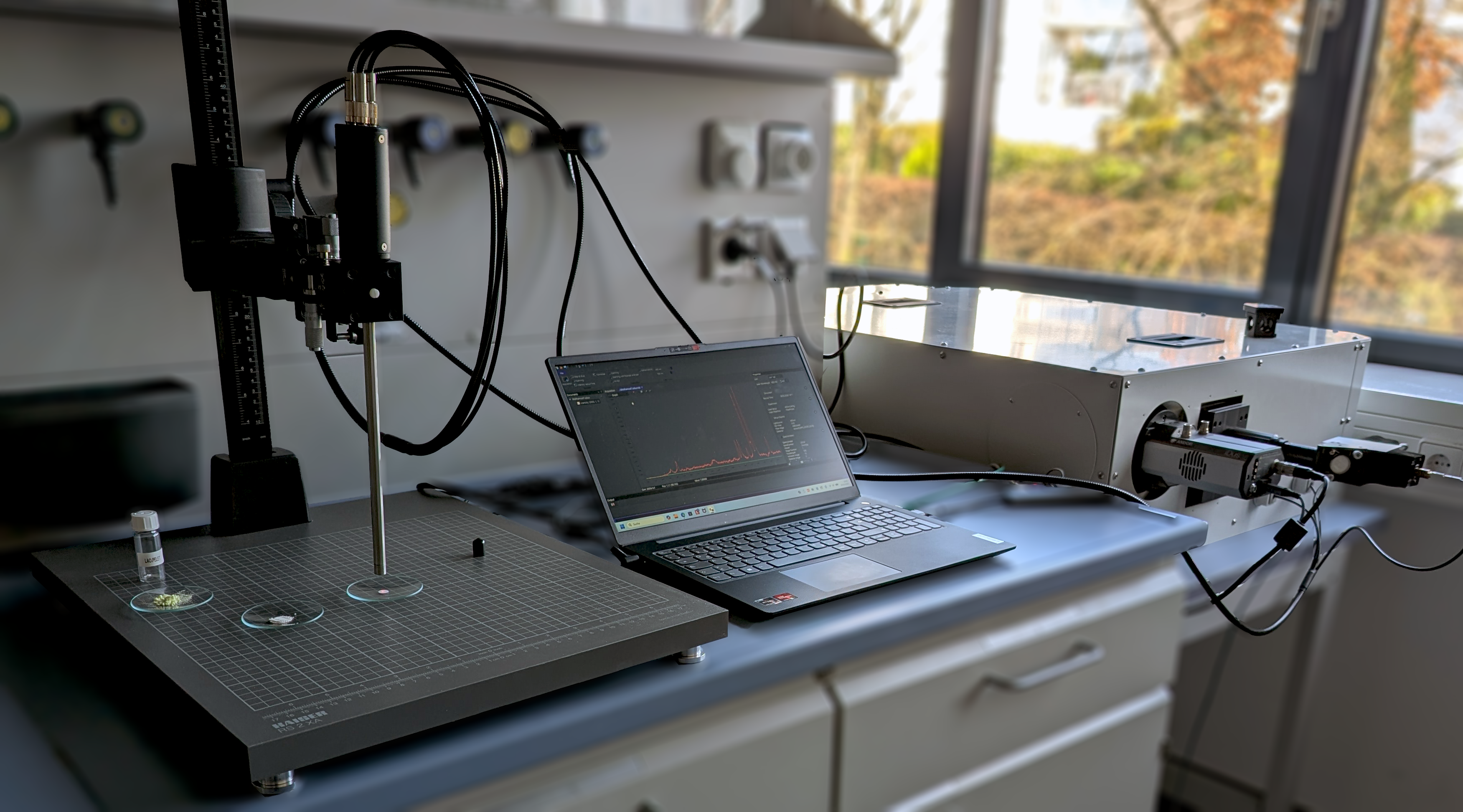
Raman Spectrometer (MonoVista CSRF S & I)
Non-destructive identification of phases, defects and lattice strain in solids via their characteristic scattering signatures of infrared light.
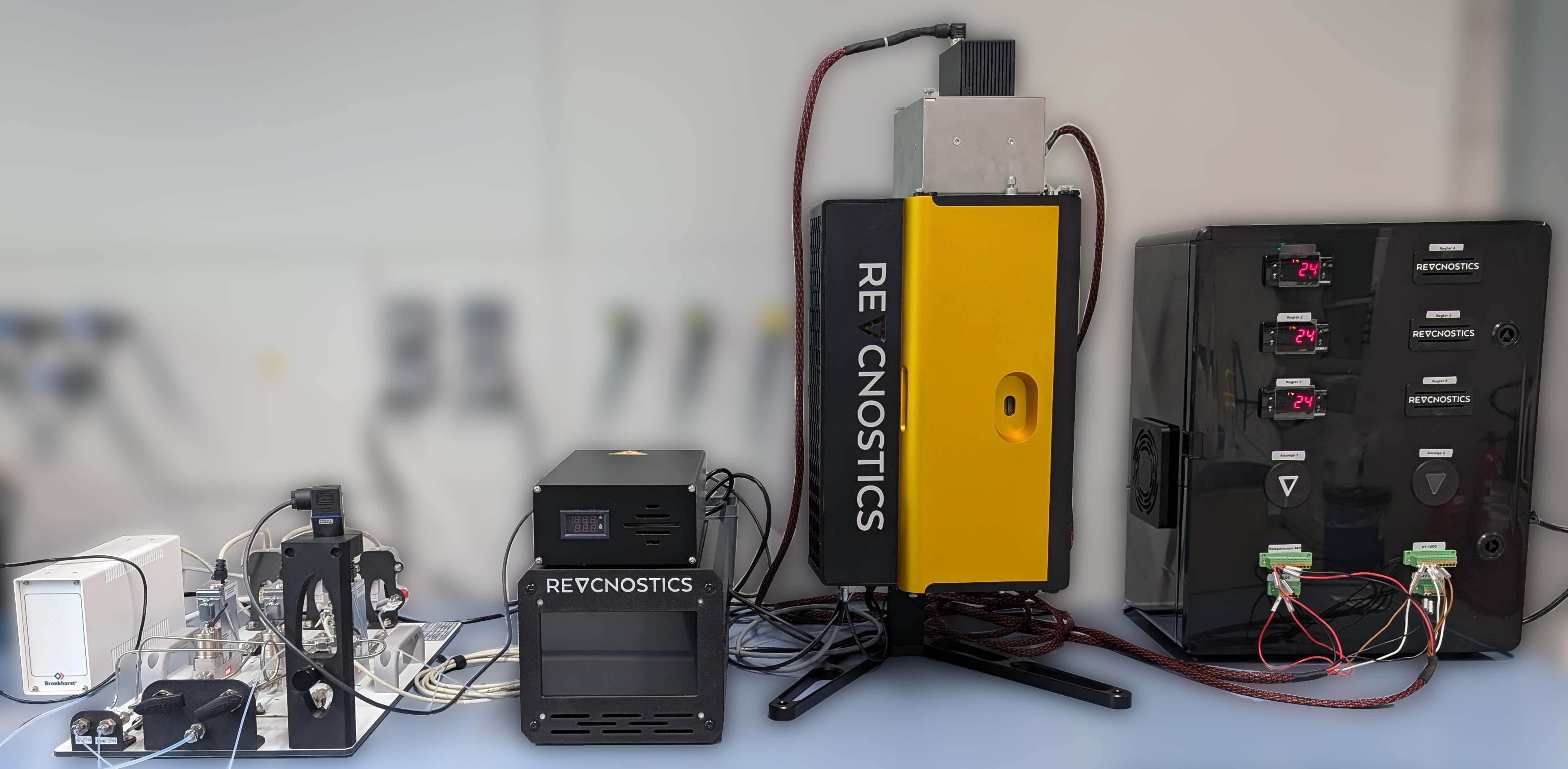
Our modular Raman spectroscopy system consists of a laser, a confocal probe and a spatially resolving measurement unit, enabling non-destruc-tive investigations of solid and liquid samples. Raman spectroscopy is highly sensitive to lattice distortions, phase mixtures and local defects in crystal structures. In our group, we use Raman spectroscopy for example to analyse phase purity and detect structural changes in ceramic materials.
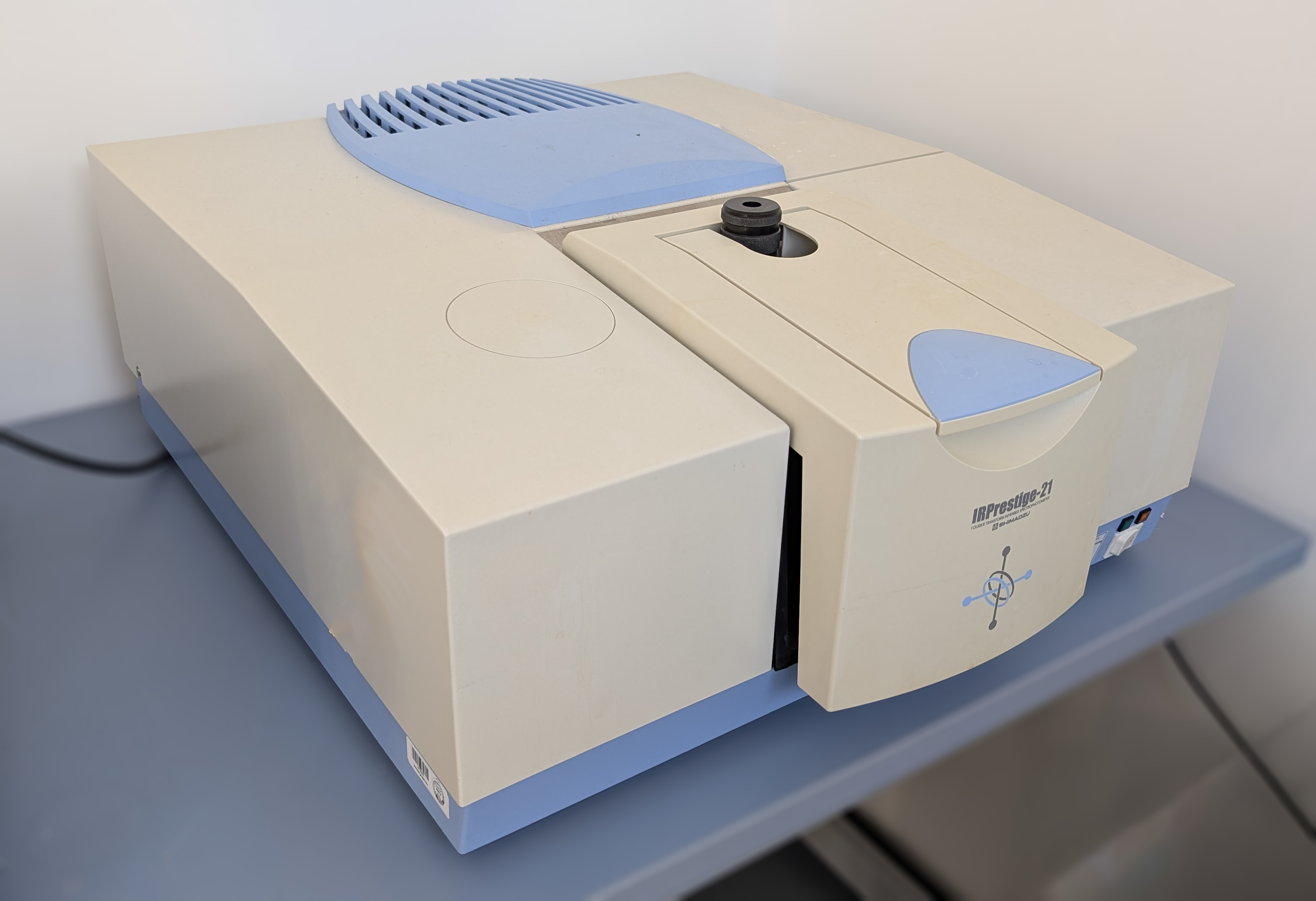
Infrared Spectrometer (Prestige 21, Shimadzu)
Fast, non-destructive identification of chemical bonds and functional groups – for solids, liquids and gases.
We use a Fourier-transform infrared spectrometer for the rapid identifi-cation of chemical bonds and functional groups in solids, liquids and gases. FTIR is one of the most versatile methods in chemical analysis – from phase identification to trace analytics. In our group, we use it to charac-terise synthesised ceramics after calcination (detection of residual carbo-nates, OH groups, lattice distortions caused by doping, etc.) or to inves-tigate adsorbed species on catalyst surfaces in order to elucidate reaction mechanisms.
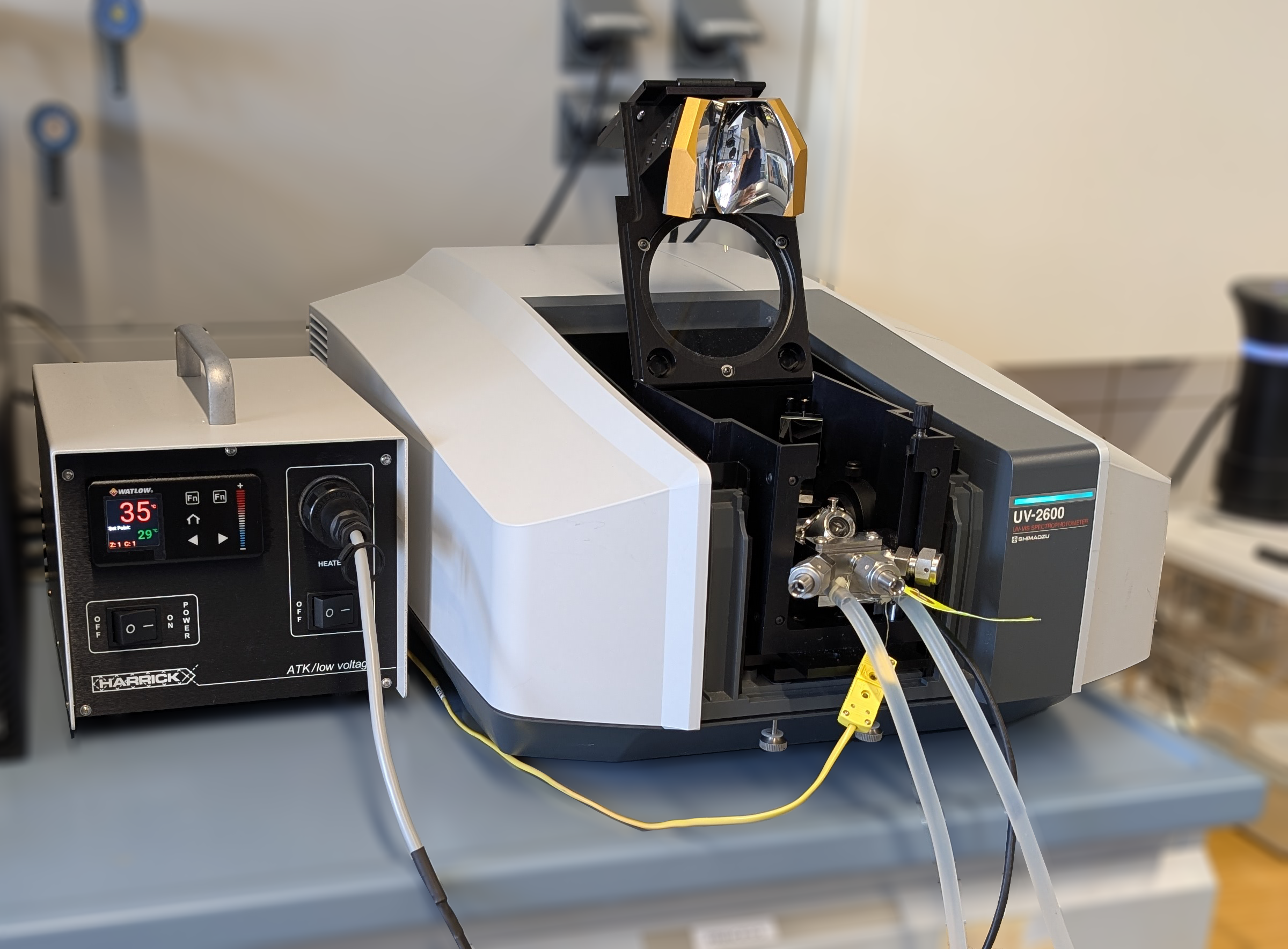
UV-Vis Spectrometer (UV-2600, Shimadzu)
UV-Vis absorption under reaction conditions – band gaps, oxidation states and catalytic processes tracked in real time.
The Shimadzu UV-2600 UV-Vis spectrophotometer is equipped with a Harrick temperature cell and flow control for in-situ and operando measurements, allowing samples to be monitored spectroscopically directly under reaction conditions (controlled temperature and gas atmosphere). In our group, we use it to determine optical band gaps (Tauc plot), the oxidation state of dopants in ceramics and to track in-situ catalytically relevant colour changes of materials – e.g. reduction and re-oxidation under reaction conditions.
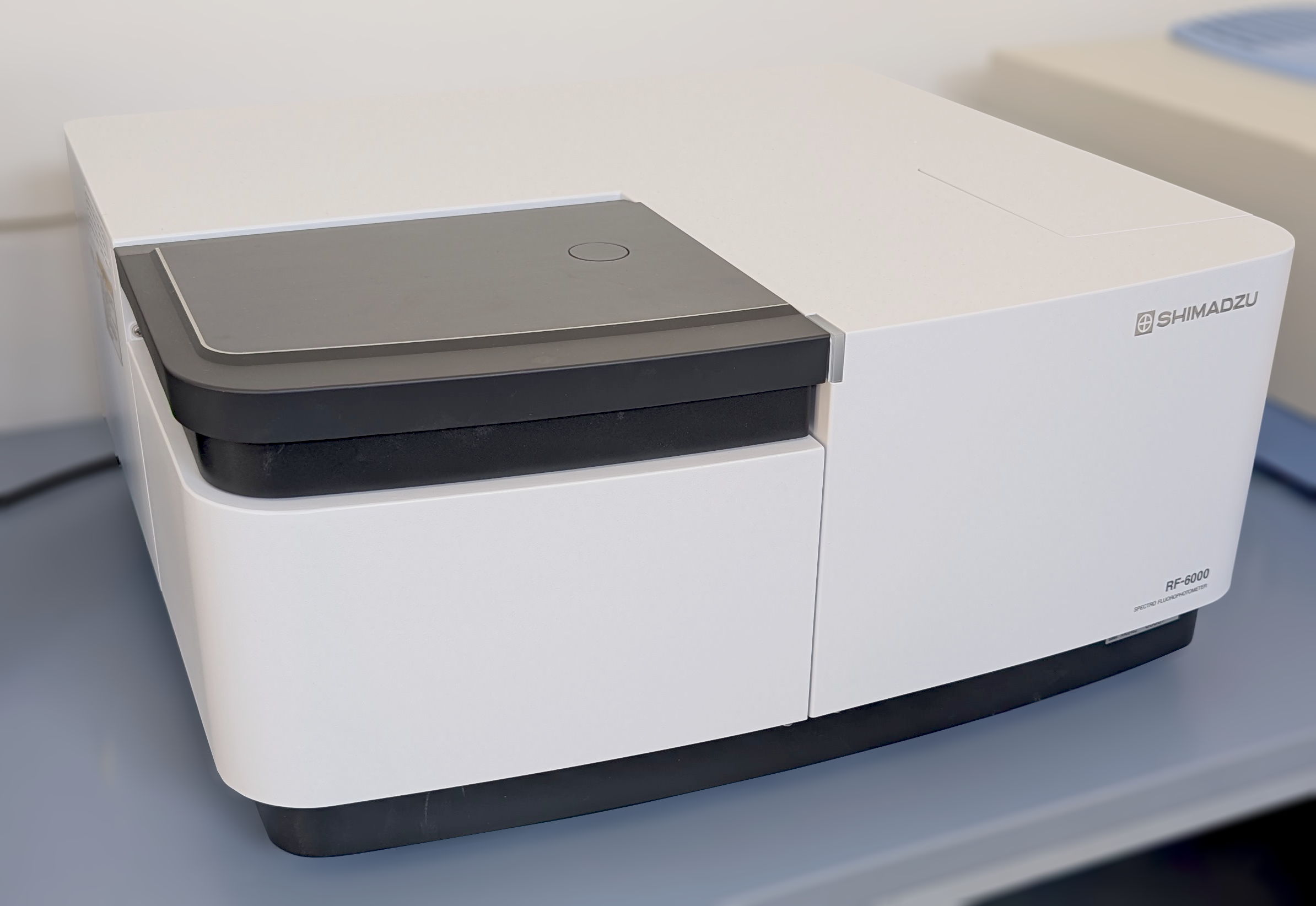
Fluorescence Spectrometer (RF-6000, Shimadzu)
Highly sensitive measurement of excitation and emission spectra in the UV-Vis range – for the optical and electronic characterisation of materials.
The high-sensitivity fluorescence spectrophotometer is suitable for exci-tation and emission measurements in the UV-Vis range on solutions and solids. In addition to classical fluorescence spectra, it enables time-resolved measurements and the determination of quantum yields. In our group, we use the instrument to investigate optical properties and defect levels in ceramics – for instance, how dopants influence luminescence and charge-transfer processes.
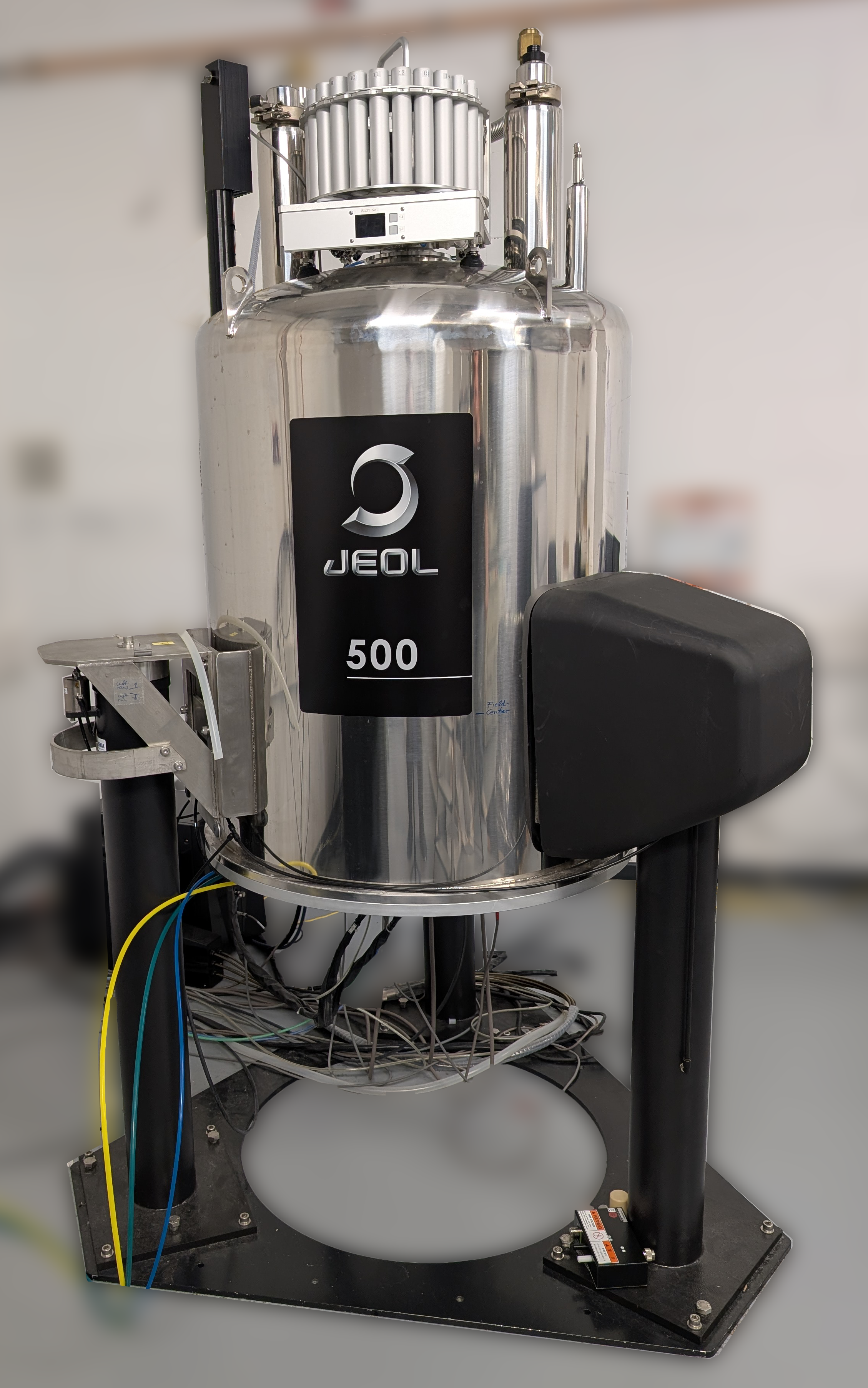
NMR Spectrometer (500 MHz, JEOL, shared instrument)
High-resolution structure elucidation via the magnetic properties of atomic nuclei – with 500 MHz performance even for demanding solid-state samples.
The high-field NMR spectrometer with superconducting cryomagnet provides high-resolution nuclear magnetic resonance spectroscopy for liquid and solid-state samples. The high field strength enables the resolution of closely spaced signals and the investigation of low-sensitivity nuclei. In our group, we use NMR for example for the structural characterisation of precursor compounds (e.g. metal salt complexes, sol-gel precursors) and can employ ¹⁰⁷Ag and ¹⁰⁹Ag NMR and related techniques for structural insights into ceramic phases after synthesis. This instrument is shared with the entire Chemistry Department.