UNIVERSITY OF KOBLENZ
Universitätsstraße 1
56070 Koblenz

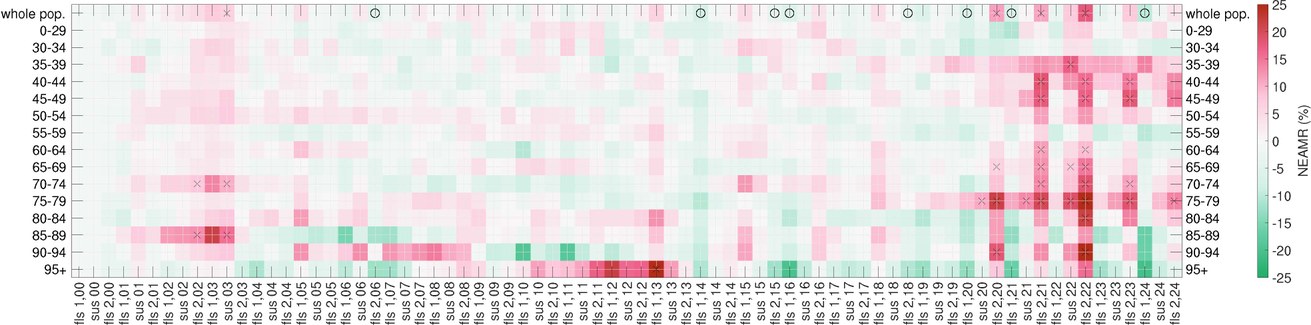
Under the title "Cohort-resolved excess mortality in Germany (2000-2024): Patterns and implications for the SARS-CoV-2 era" (https://doi.org/10.1371/journal.pone.0334884), Dr Robert Rockenfeller (University of Koblenz) and Dr Michael Günther (University of Stuttgart) examined mortality in Germany from 2000 to 2024 for the first time using a so-called cohort-resolved approach. The data was analysed not only by year, but also by age group and calendar week in order to reveal hidden differences between generations.
The result shows a much more differentiated picture of the pandemic period than the overall statistics most commonly used to date. For example, 2020 did not show any unusual excess mortality, while new patterns emerged in the years following the start of the vaccination campaign at the end of 2020. Particularly striking were persistent deviations in the age groups of 35 to 49-year-olds and 75 to 79-year-olds, which persisted over several years.
"Our results show that the decisive changes in mortality patterns only occurred after the start of the mRNA campaign - not at the beginning of the pandemic," the study states. In several age groups, the authors also found unexpected and temporally shifted correlations (cross-correlations) between the excess mortality patterns and the rates of SARS-CoV-2 mRNA injections. The researchers emphasise that these results do not necessarily indicate causality, but underline the need for further, hypothesis-based investigations. "In addition, our calculations show that the excess mortality trajectories by age cohort differ considerably in some cases," explains Rockenfeller. "Such differences can easily be overlooked in aggregated overall data." The study emphasises that the course of the pandemic and its health consequences cannot be described by simple key figures. Rather, it shows that social, biological and political factors interacted in a complex way. For example, the cohorts at the end of the two world wars are obviously more susceptible to the general incidence of disease, which is reflected in a periodic increase in deaths.
"Our work is a contribution to a differentiated, data-based reappraisal of the pandemic period," says Günther. "Because it suggests that a considerable part of the general public and political measures - from lockdowns to compulsory vaccination - were based on assumptions that, in retrospect, turn out to be at least insufficiently substantiated."
In conclusion, the authors argue in favour of permanent, finely resolved, age-related mortality monitoring in order to be able to better understand and assess health policy decisions in the future - and to draw lessons from the corona period on the basis of scientific facts.
UNIVERSITY OF KOBLENZ
Universitätsstraße 1
56070 Koblenz
© Universität Koblenz