UNIVERSITY OF KOBLENZ
Universitätsstraße 1
56070 Koblenz

Dear alumni,
Today we present the last newsletter issue of 2025 with the following articles:
The first article in the newsletter is aimed at female students, graduates, scientists, or women* who have completed vocational training. Starting in December, you can apply for the Exist Women funding program for female founders to receive a scholarship for your path to self-employment.
International alumni can participate in the FIT4SukCESS Alumni Talk. This allows them to connect with international students and share their individual career stories. International students also have the opportunity to ask personal questions and exchange ideas.
In this newsletter issue, we also report on an exciting research project involving accident reconstruction using AI, in which 3D reconstructions of accident sites are to be created with the aid of bodycam recordings.
This month saw the annual meeting of the BioGeoSciences student council, which gave alumni, students, and lecturers in the field of BioGeoSciences the opportunity to exchange experiences with regard to starting a career and career paths.
If you still want more news after reading this newsletter, you can gain further exciting insights into research and teaching through the podcast from the University of Koblenz. The podcast presents research in an understandable way, and researchers also share personal anecdotes that bring to life the everyday life and passion behind science. In December, the podcast will even be released weekly!
By the way: The University of Koblenz participated in the Koblenz Weeks of Democracy again this year!
We wish you a relaxing time!
Your team at the Central Alumni Office
Do you have an idea that you've wanted to realise for a long time - or are you dreaming of starting your own project, but don't know exactly where to start? Then EXIST-Women just the right thing for you!
The Founding Office of the University of Koblenz accompanies women on their path to self-employment with commitment, knowledge and a strong network. From December 2025 female students, graduates, scientists and women who have completed vocational training can apply for the next funding round of the year 2026 application.
As part of EXIST-Women, participants are supported for a year in developing and concretising their start-up idea and transforming it into a viable business model. Whether they already have a clear goal or want to discover their own entrepreneurial potential first - the programme offers Individual counselling, practice-oriented workshops and access to inspiring mentors.
Particularly valuable is the Exchange with other female founders who are travelling the same path. The participants become part of a committed community that supports and inspires each other and encourages them to boldly develop their own ideas. In addition, they receive a three-month scholarship in the amount of 1,000 to 3,000 euros per month depending on the individual's status. This creates the freedom to concentrate fully on your own idea and the next step towards self-employment.
Supported by the Federal Ministry for Economic Affairs and Energy (BMWi) EXIST-Women is part of the initiative "EXIST - Start-ups from the academic world" and pursues the goal, to bring more women into the start-up scene and make their innovative strength visible.
Interested women can register from December 2025 for the 2026 programme year. Before submitting an application, it is advantageous to contact Dr van der Beek from the Founding Office of the University of Koblenz (vanderbeek@uni-koblenz.de).
Further information on the EXIST-Women project can be found on the BMWE website at https://exist.de/en/programm/exist-women/
Information about the application procedure will be available on the website of the Founding Office from December: https://www.uni-koblenz.de/en/start-up-office
What comes after graduation? What paths are open to international graduates of the University of Koblenz in Germany and what challenges do they bring with them? At the FIT4SukCESS Alumni Talk international students from the University of Koblenz meet international alumni who talk about their personal experiences at the start of their careers.
Three alumni who completed their Master's degree in Mathematical Modeling, Simulation and Optimisation and in Web and Data Science from the University of Koblenz talk about their individual career paths, share personal tips for starting a career and report on which experiences and strategies were particularly helpful during their studies. Afterwards, students can ask specific questions, exchange ideas and make contacts in small discussion groups: each alumnus or alumna takes a seat at their own topic table, where the focus is on personal dialogue. The Alumni Talk offers an open and practical opportunity to learn from each other, network and develop perspectives for your own future.
The FIT4SukCESS programme is a DAAD-funded project that supports international students at the University of Koblenz throughout their entire student life cycle - from study orientation to everyday study life and the successful transition to a professorship appointment. It offers language courses, workshops and networking events that strengthen language, academic and intercultural competences and prepare students for their career start in Germany.
Interested students and alumni are cordially invited!
Participation is free of charge, registration is via OLAT is desired.
When: 16 December 2025, 18:00 - 20:00
Where: Koblenz University Campus, Room E 413
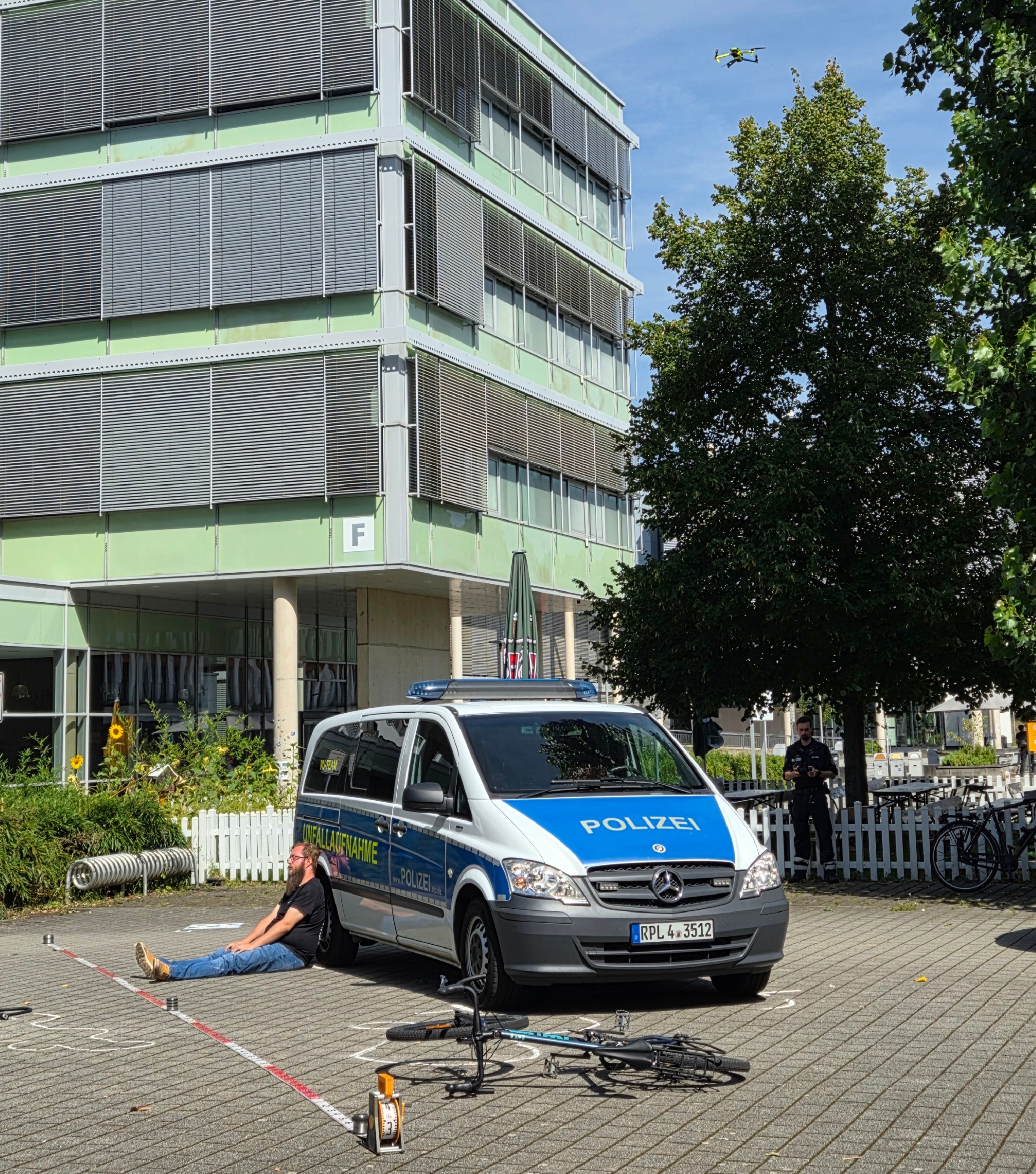
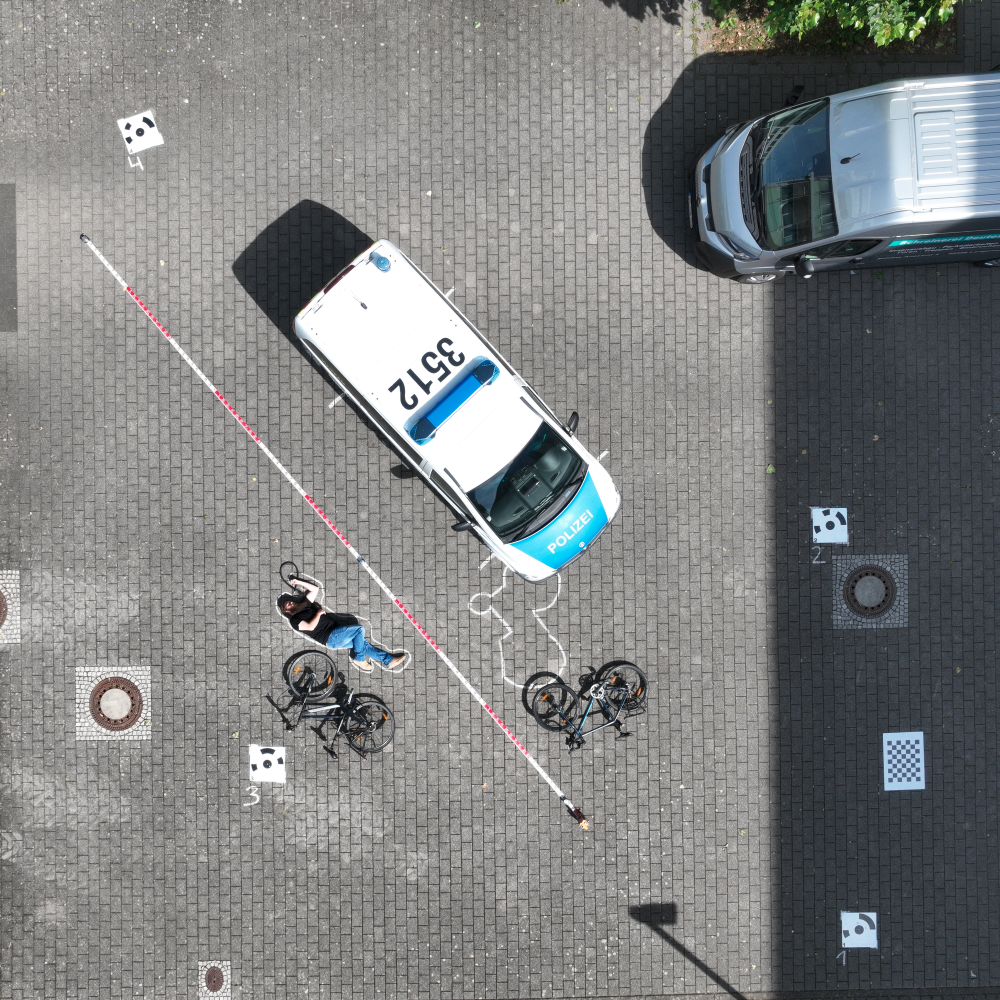
In reality, the police often arrive at the scene of an accident after the fire brigade and emergency services have already taken initial measures. By this point, evidence of the accident may already have been altered or may no longer be fully traceable. In order to ensure that reliable evidence is preserved, the accident site is subsequently measured and reconstructed in three dimensions using drone images and ground markings. The key question here is: Is it possible to create a realistic 3D reconstruction of the original accident scene?
The Institute for Computer Visualistics at the University of Koblenz is addressing this question. As part of the AI-DPA research college, in cooperation with the Koblenz Police Headquarters, the possibility of using bodycam recordings of first responders (e.g. firefighters or paramedics) to create a precise 3D reconstruction of the accident site is being investigated. The aim is to capture the condition of the scene as accurately as possible at the moment the first responders arrive.
Video recordings are turned into a spatial map
So-called multi-mono SLAM methods are used. These combine the simultaneous localisation and mapping (SLAM) method with several monocular cameras. This technology makes it possible to create a spatial map from ordinary video recordings and calculate the camera movement at the same time. However, different lighting conditions (day/night), bad weather, lots of moving objects – such as passers-by or paramedics – and dynamically changing scenes pose major challenges for the method.
Collected data is evaluated in research and teaching
A bicycle accident was staged on the university campus in cooperation with the police in order to test these challenges under controlled conditions. Various sensors were used, including bodycams worn by police officers who inspected the accident site as they would in a real-life situation, drone footage as used by the police for later reconstruction, and RGBD and LiDAR data as ground truth (reference data). The conditions were gradually made more difficult in several runs.
The collected data is now being evaluated and used in research and teaching. The focus is on how reliably the reconstruction works under different conditions and which combination of sensors, algorithms and recording positions is most suitable. This represents an important step forward for the Institute of Computer Visualistics towards practical, digitally supported accident analysis. If the further development is successful, bodycam recordings made by first responders could serve as the basis for reconstructions that can be used in court, thus saving time and clarifying the course of accidents more precisely.
How is knowledge that moves society created? How can research be communicated in an understandable way – and who are the people behind the projects carried out at the University of Koblenz? The podcast ‘weiter:denken’ provides answers to these questions – well-founded, clear and directly from the research.
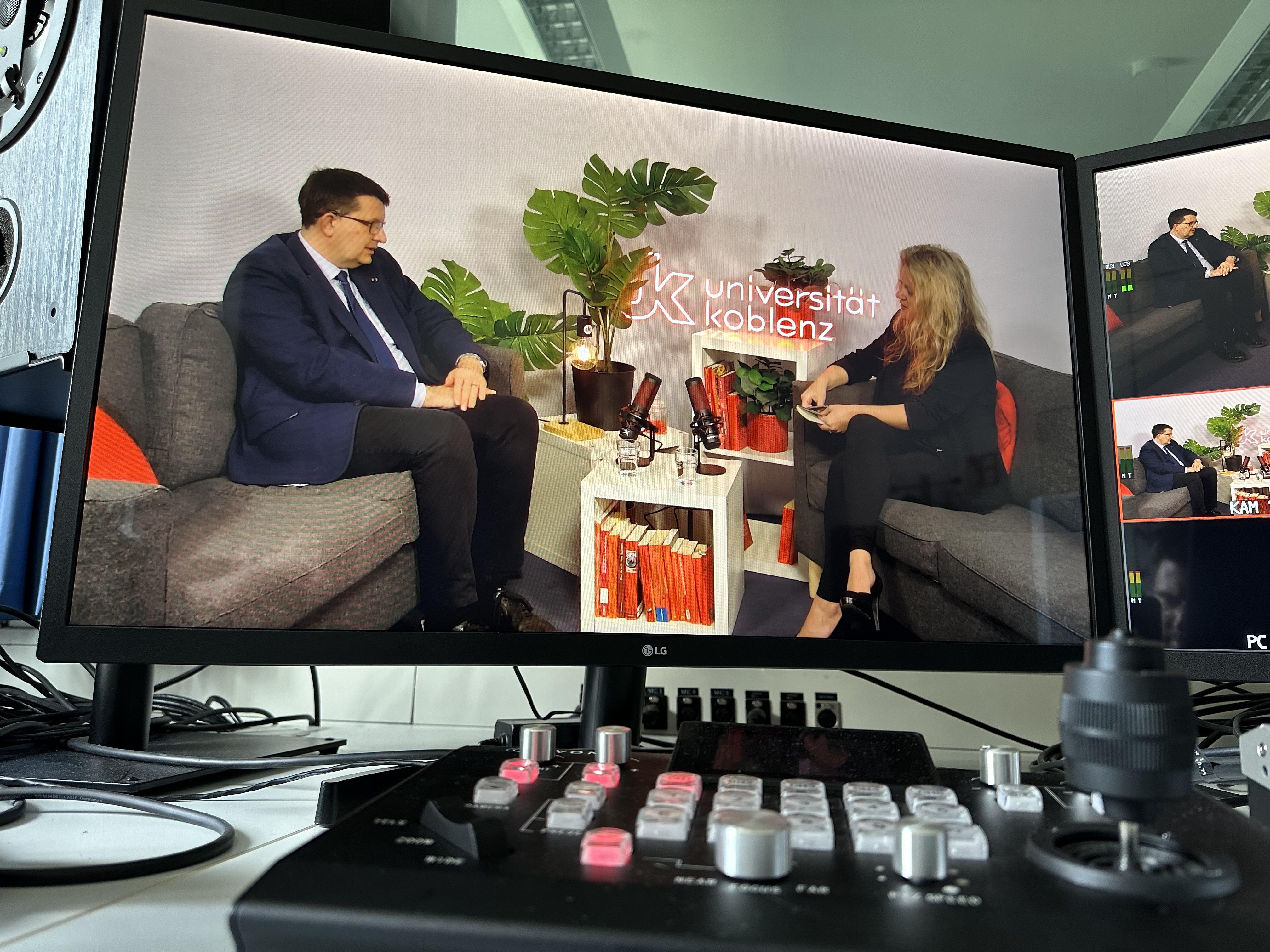
Since the start of the semester in April 2025, Koblenz University has been regularly inviting people to experience science in an audible way. In the first episode, University President Prof. Dr. Stefan Wehner spoke about current developments, future issues and visions for Koblenz University. At the same time, he offered small, personal insights – such as his enthusiasm for the North Sea – making it clear that the podcast not only presents scientific content, but also gives a voice to the people behind it: science remains well-founded and lively.
Invited by Christoph Asche and Dr Inka Engel, ‘weiter:denken’ stands for an open, curious approach to knowledge, the courage to look at topics from different angles, and the ability to link disciplines. Whether artificial intelligence, technology education or social cohesion – the podcast addresses issues that are relevant beyond the campus.
Normally, ‘weiter:denken’ is published once a month. However, this year there will be a special Advent series. Starting on the last Sunday in November, just in time for the first Sunday in Advent, a new episode will be released every Sunday in December. Listeners can look forward to exciting insights into research and teaching: from ancient boats from Mesopotamia to technology education in robotics and makerspaces, from high-performance ceramics for industry and medicine to sustainable projects on campus. In addition, we will take a close look at digital communication in December: How are emojis and chats changing the way we express ourselves? How does language used by right-wing populist or extremist groups emerge on the internet, and what mechanisms contribute to radicalisation? These topics will be explained in an easy-to-understand way – always combined with personal anecdotes from the researchers, who bring the everyday life and passion behind science to life.
Whether you're out for a walk, relaxing on the sofa or in the car, the university's podcast offers inspiring insights into projects that demonstrate how versatile, creative and accessible research, science and knowledge transfer are considered at Koblenz University.
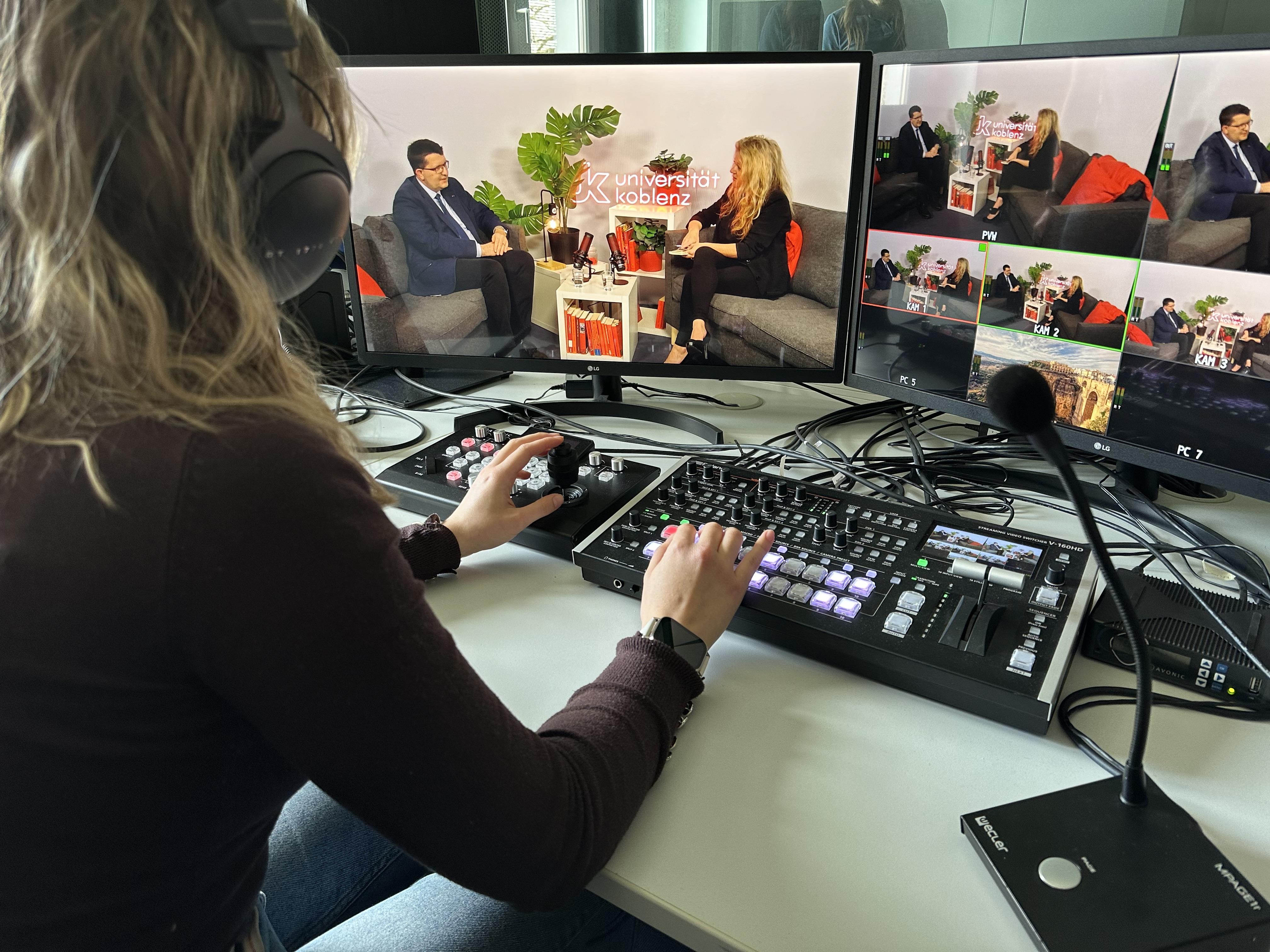
‘weiter:denken’ is available on all popular platforms and directly on the University of Koblenz website: http://www.uni-ko.de/wisskomm This means that the podcast is not only accessible to students and researchers, but also to a wider audience – in line with the university's mission to transfer knowledge.
‘weiter:denken’ shows that science thrives on dialogue. It is not a one-way street, but a joint process of questioning, understanding and passing on knowledge. The podcast invites listeners to experience this process – with curiosity, openness, joy in thinking and frequent little personal insights into the people who bring research to life.
From the end of November, it will once again be Sunday podcast day. Tune in, listen, think ahead – wherever podcasts are available.
Listen to an excerpt from the latest podcast episode here.
You can find the entire episode here.
On Friday, November 14, 2025, the fifth BioGeo Alumni Evening took place.
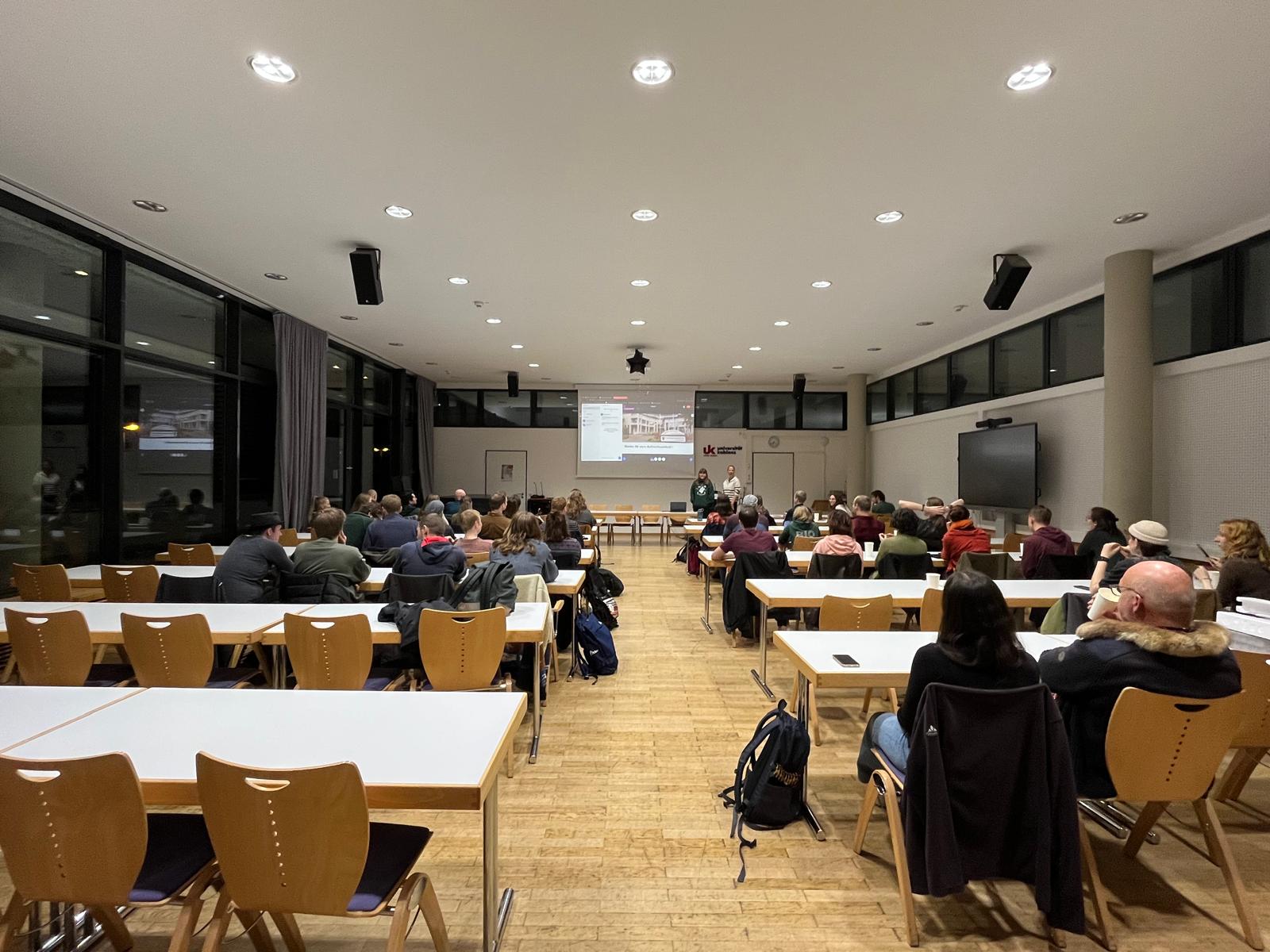
The event, organized annually by the FSV BioGeo Sciences and several alumni, attracted around 40 participants this year. BioGeo students, graduates, and lecturers from the department were invited. The evening serves as a central opportunity for students and alumni in professional life to establish professional contacts and network. The primary goal is to give students a concrete idea of the diverse career paths that BioGeo Sciences graduates can pursue.
After a meet and greet, nine graduates presented their professional careers in a series of lectures. The presentations were divided into the topics of “Government,” “Science,” “Planning Office,” and “Miscellaneous.” Afterwards, two “breakout sessions” were used for a personal exchange of experiences, during which individual questions could be clarified and important advice for starting a career could be obtained. The event then ended in a relaxed atmosphere in the city.
UNIVERSITY OF KOBLENZ
Universitätsstraße 1
56070 Koblenz
© Universität Koblenz